
Microsoft has introduced a new artificial intelligence model, VibeVoice, designed to generate speech that closely mimics the natural emotion and rhythm of a human conversation. This is the most advanced TTS (Text-To-Speech) model, capable of generating human-like speech from text input. This article covers important highlights of Microsoft’s new VibeVoice AI model.
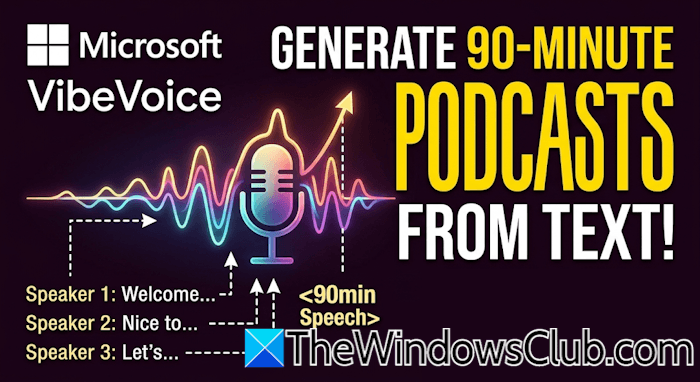
Microsoft’s new VibeVoice AI can mimic the natural emotions of human conversation
VibeVoice is a novel framework designed for generating expressive, long-form, multi-speaker conversational audio from text, such as Podcasts. It is a family of open-source frontier voice AI models, including both TTS and ASR (Automatic Speech Recognition) models.
By introducing VibeVoice, Microsoft aims to make AI-generated voices more engaging and expressive during a conversation. It supports 50+ languages, including English and Chinese.
VibeVoice TTS
VibeVoice TTS is best for generating long-form conversation audios, podcasts, and multi-speaker dialogues. Unlike traditional Text-to-Speech AI systems that often sound robotic, VibeVoice AI aims to replicate the exact conversational pattern of human beings — including pauses, tone shifts, and emotions.
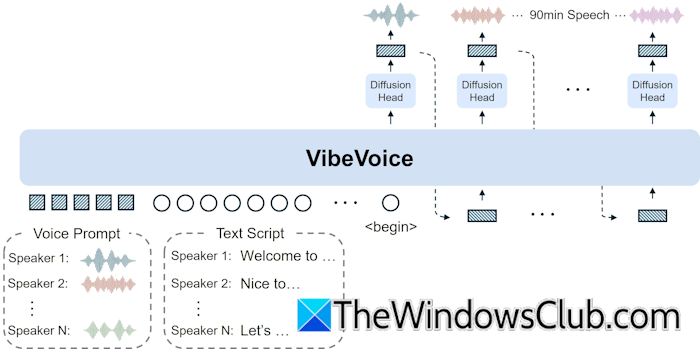
VibeVoice TTS can generate up to 90 minutes of continuous audio in a single pass by maintaining speaker consistency. It supports up to 4 distinct speakers in a single conversation, making it a perfect tool for creating long-form AI-generated videos and podcasts.
To achieve this, Microsoft used a next-token architecture. This architecture allows the AI model to understand the context of a conversation and express the right emotions, such as anger, excitement, or joy.
VibeVoice employs a next-token diffusion framework, leveraging a Large Language Model (LLM) to understand textual context and dialogue flow, and a diffusion head to generate high-fidelity acoustic details.
VibeVoice ASR
VibeVoice ASR is a unified speech-to-text AI model, capable of handling a 60-minute-long form audio in a single pass. It can create organized or structured scripts that clearly show who is speaking, when, and what they spoke. Users can also add Hotwords, such as specific names, technical terms, or background info, to make it even more specific for specific topics.
VibeVoice risks and limitations
Microsoft has also highlighted some risks associated with the model and its limitations. It may produce unexpected, biased, and inaccurate outputs. Since the model can mimic the true accent of human conversation, the generated voice output could be misused for spreading misinformation.
You can get complete information about VibeVoice AI on Microsoft’s official GitHub page.

Leave a Reply